
Top 10 Animals That Scream Like Humans: Nature’s Most Terrifying Voices
**Secondary keywords:** animal that sounds like a woman screaming, animals that sound human, fox screaming at night, cougar scream, scary animal sounds, humanlike animal calls
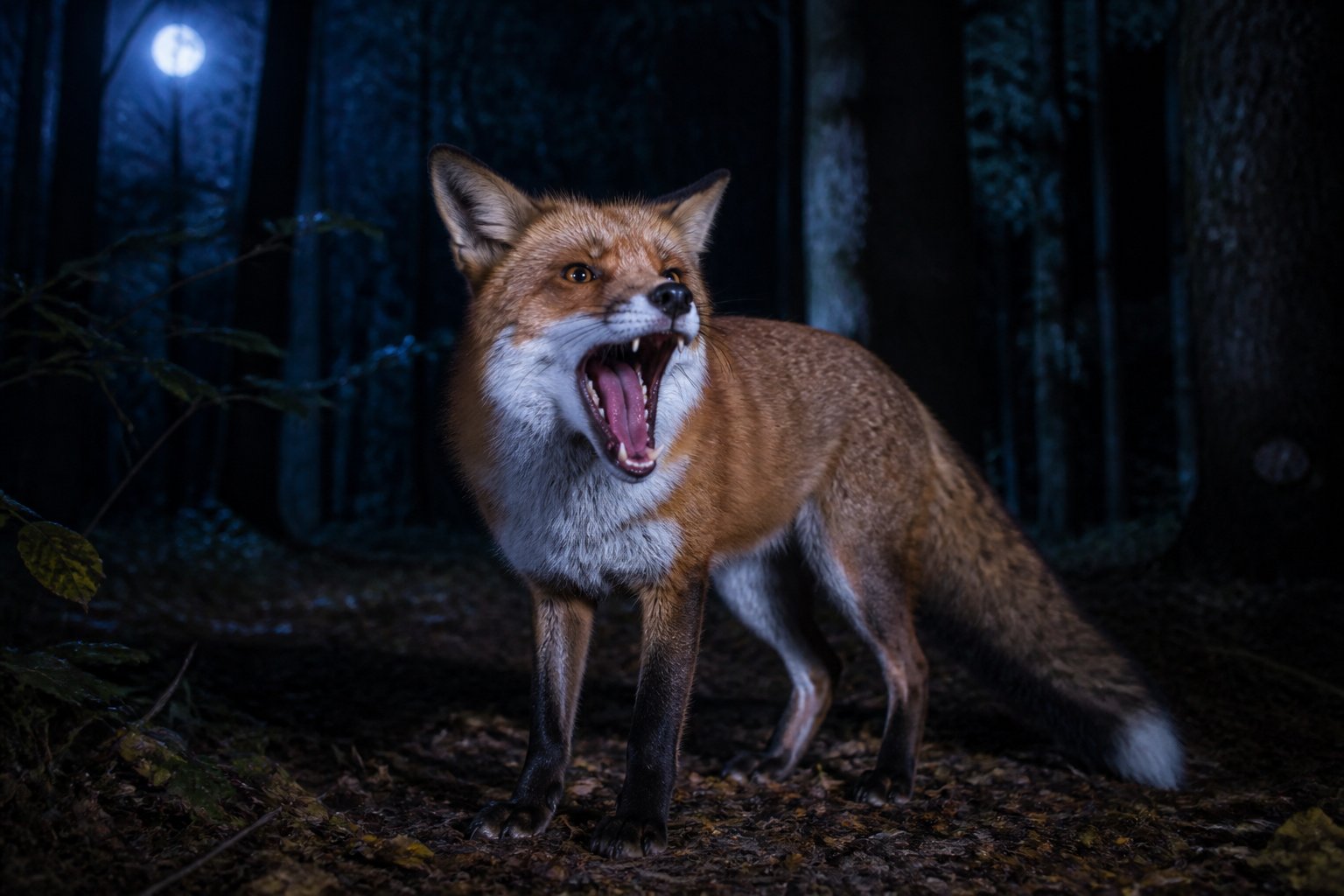
*Suggested alt text: Red fox making a humanlike scream in a forest at night.*
You are outside after sunset when a scream cuts through the darkness. It sounds close, frightened and unmistakably human. Your first instinct may be to search for a person in trouble—but nature has some remarkably convincing impersonators.
Several mammals and birds produce calls that our brains interpret as cries, shouts, laughter or even arguments. Some vocalize to attract mates. Others warn rivals, defend territory, locate family members, or react to immediate danger. Distance, darkness and echoes can make the resemblance even stronger. A fox calling across a quiet neighborhood may sound like a woman screaming. A barn owl hidden in an old building can resemble a person shrieking. Two lynxes vocalizing together can sound like an angry human confrontation.
The phrase “scream like a human†is descriptive rather than scientific. Animals do not necessarily experience or express the same emotions that a person would when making a similar sound. Their calls simply share features—such as pitch, rhythm, roughness and sudden intensity—with the human voice.
This countdown explores ten animals with some of the most startling humanlike cries. It also explains why they make those sounds, when you are most likely to hear them and how to respond safely.
## Why Do Some Animal Screams Sound Human?
Humans are exceptionally alert to voices. Our brains constantly search for familiar patterns, especially sounds that might signal danger. A call does not need to copy human speech perfectly to trigger that recognition. A rising pitch may resemble panic; irregular bursts may sound like sobbing; and a long, rough call may remind us of a scream.
Many animals also possess a larynx, vocal folds or other sound-producing structures capable of generating complex tones. Body size, the shape of the vocal tract and the force of moving air all influence the final sound. Larger animals can produce unexpectedly deep calls, while smaller species sometimes release piercing noises far louder than their appearance suggests.
The environment adds another layer. Forests hide the caller, valleys carry sound over long distances, and buildings create echoes. At night, reduced traffic and human activity make wildlife calls more noticeable. Without a visible source, the imagination fills in the missing information—and often assumes the voice belongs to another person.
## Number 10. Goat
Goats are among the internet’s most famous screamers. Their bleats vary enormously between individuals. One goat may produce a short, nasal “maa,†while another seems to yell an entire sentence with the emotional intensity of a frustrated person.
Goats use vocalizations to maintain contact with their social group. Mothers and kids recognize one another through voice, and an isolated goat may call repeatedly to locate companions. Hunger, anticipation, stress and excitement can also increase vocal activity. Domestic goats quickly learn that calling attracts human attention, particularly around feeding time.
The humanlike quality comes from dramatic changes in pitch and the way some calls begin softly before rising into a long cry. Videos often amplify the comic effect by pairing these sounds with surprised facial expressions. However, persistent or unusual screaming should not automatically be treated as entertainment. A goat calling continuously may be uncomfortable, separated from its herd or experiencing a health problem.
**Best time to hear it:** Around feeding, during separation or when goats are excited by nearby activity.
## Number 9. Peacock
A peacock looks regal, but its voice can be startling. The male Indian peafowl produces loud calls that carry across gardens, farms and wooded areas. One familiar call is frequently interpreted as “help!†because its two-part rhythm and rising intensity resemble a distant person shouting the word.
Males become especially vocal during the breeding season. Calling helps advertise their presence and may accompany the spectacular display of the train—the long, colorful feathers commonly called the tail. Peafowl also give alarm calls when they detect potential danger. Their powerful voices allow them to communicate over substantial distances, which explains why a single bird can wake an entire neighborhood.
Peacocks are most confusing when vegetation or darkness hides them. A new resident may hear repeated cries without realizing that ornamental birds live nearby. Once the source is identified, the supposedly supernatural scream becomes a normal part of peafowl communication.
**Best time to hear it:** Early morning, evening and throughout the breeding season.
## Number 8. Rabbit
Rabbits are generally quiet, making their scream particularly disturbing. A rabbit may produce a piercing, high-pitched cry when it is terrified, badly hurt or in extreme distress. The sound can resemble a child or person screaming and is very different from the subtle grunts, honks and tooth-purring noises rabbits use in ordinary situations.
This is not a casual communication call. A wild rabbit may scream when captured by a predator, while a domestic rabbit may do so during a severe emergency. Anyone who hears a pet rabbit scream should immediately check for injury or danger and contact a veterinarian when appropriate. Handling should be gentle because frightened rabbits can injure themselves while struggling.
From an evolutionary perspective, a distress scream may startle a predator, attract another threat that interrupts the attack or warn nearby rabbits. Whatever its function, it usually represents a serious moment. This is the one sound on the list people should hope never to hear from a rabbit.
**Best time to hear it:** Rarely, and generally only during extreme fear, pain or danger.
## Number 7. Harbor Seal
Harbor seals have a broader vocal repertoire than many beach visitors expect. Depending on age and situation, seals can bark, growl, grunt, moan or produce cries that sound strangely human. Pups are especially vocal when maintaining contact with their mothers.
Sound is essential in an environment where waves, wind and distance can interfere with communication. A voice that seems comical in a close-up recording can become mysterious when it travels across foggy water. Some seal calls resemble groaning adults; others sound like a person calling from beyond the surf.
Visitors should never approach a seal to investigate or capture a better recording. A seal resting alone on land is not necessarily abandoned, and a mother may remain offshore while monitoring her pup. Keep dogs controlled, remain at a respectful distance and follow instructions from local wildlife authorities or marine-mammal rescue organizations.
**Best time to hear it:** Near coastal haul-out sites and during mother-pup interactions.
## Number 6. Koala
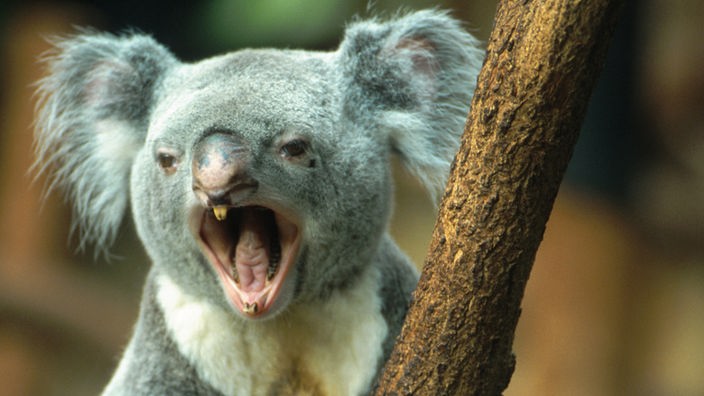
*Suggested alt text: Koala opening its mouth while making a loud territorial call.*
Few voices contrast with an animal’s appearance as dramatically as the koala’s. Koalas look soft and peaceful, yet adult males can produce deep, resonant bellows. The call may begin with inhalation-like sounds and continue with rough grunts that seem too powerful for the caller’s body.
Male koalas use bellows most prominently during the breeding season. The sound communicates presence and may help other koalas assess the caller. Females and younger animals also vocalize, and a frightened or agitated koala can release harsh cries, snarls or screams.
The surprise comes partly from expectation. People associate a small, tree-dwelling herbivore with gentle noises, not something that resembles a motorcycle, a snoring giant or a horror-movie creature. Their anatomy helps create the effect: specialized vocal structures allow males to generate unusually low frequencies for their size.
If you encounter a koala on the ground or near a road, avoid crowding it. A distressed animal may vocalize because it feels trapped. Contact an appropriate wildlife rescue group if it appears injured or is in immediate danger.
**Best time to hear it:** At night, particularly during the breeding season.
## Number 5. Barn Owl
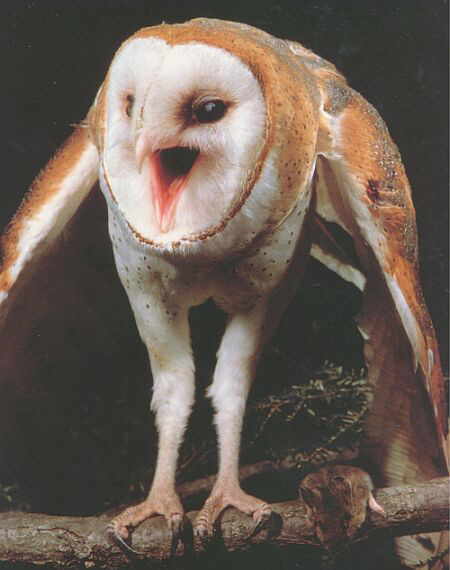
*Suggested alt text: Barn owl making a rasping scream while perched at night.*
Not every owl says “hoo.†The barn owl is famous for a long, rasping scream that can transform a peaceful nighttime walk into a frightening experience. Its pale, heart-shaped face and nearly silent flight make the encounter even more dramatic.
Barn owls use several sounds, including screeches, hisses and softer calls around the nest. Adults may scream during flight or communication, while young owls use food-begging calls. The Cornell Lab’s bird-sound tools distinguish barn owls from familiar hooting species and allow listeners to compare recordings rather than relying on folklore.
Old barns, church towers, hollow trees and agricultural landscapes provide suitable roosting or nesting locations. When a hidden owl screams inside a structure, wooden walls and open rafters can distort the call until it resembles a person in distress. Despite centuries of ominous legends, the sound is ordinary animal behavior. Barn owls are valuable rodent hunters and play an important ecological role.
Do not disturb an active nest. Observe from a distance, minimize bright lights and use bird-identification recordings responsibly. Repeatedly playing calls can stress or distract territorial birds.
**Best time to hear it:** After dark around open fields, farms, barns and nesting sites.
## Number 4. Fisher
The fisher earns a place on many “animals that scream†lists, but it comes with an important myth-busting note. Fishers are agile forest mammals in the weasel family. They can hiss, growl, chuckle or make sharp defensive sounds, yet the famous prolonged “fisher scream†shared online is frequently misidentified.
Red foxes, bobcats and other nocturnal animals are often the true performers. Because fishers are elusive and unfamiliar to many people, an unexplained forest scream can easily be assigned to them. The story then spreads through social media, neighborhood groups and campfire conversations.
That does not mean fishers are silent. A threatened or cornered animal can produce an alarming vocalization. The accurate takeaway is that sound alone rarely proves which species is present. Location, duration, repetition, tracks, camera footage and known wildlife ranges all offer better evidence.
Fishers generally avoid people, and seeing one is not a reason for panic. Give it space, keep small pets supervised and never attempt to feed or corner wildlife. This entry shows why responsible nature content must separate a plausible animal sound from a viral internet legend.
**Best time to hear it:** Uncommon; brief defensive sounds may occur during close encounters, while long “fisher screams†should be treated as unconfirmed.
## Number 3. Lynx
Lynxes are quiet and secretive much of the time, but their intense vocal encounters sound anything but discreet. Yowls, growls, caterwauls and rough cries can resemble people shouting at one another. Two wild cats facing each other may create an astonishing soundtrack of escalating wails.
These calls are most likely in social, territorial or reproductive situations. Because lynxes usually remain hidden in forest cover, listeners may hear the commotion without seeing either animal. Snow, trees and uneven terrain further disguise the location, making the voices seem to come from several directions.
Human ears are especially sensitive to the emotional pattern of cat vocalizations. Domestic cats can sound baby-like when meowing and frighteningly human when fighting. A lynx uses some comparable sound structures at much greater intensity. The National Park Service has even featured field descriptions of a lynx yowling like it was “singing death metal,†a memorable comparison that captures the rough quality of the call.
Wild lynxes rarely seek interaction with people. If you hear one, remain calm, keep your distance and secure pets. Observing tracks or recording sound from a safe location is preferable to following the animal through dense habitat.
**Best time to hear it:** During breeding activity or confrontations, often in remote forest habitat.
## Number 2. Red Fox
The red fox is probably responsible for more mistaken reports of human screaming than almost any other common wild animal. Its best-known cry is a sharp, rising scream that many listeners compare to a frightened woman. The call can be repeated at intervals, creating the impression that someone is moving through the neighborhood.
Foxes possess a varied vocabulary rather than a single signature sound. They bark, whine, squeal and produce short contact calls. The scream is strongly associated with communication during the winter breeding period, although fox vocalizations may be heard at other times. Another dramatic call, sometimes called the “gekkering†sound, consists of rapid, harsh notes used during excited or aggressive encounters.
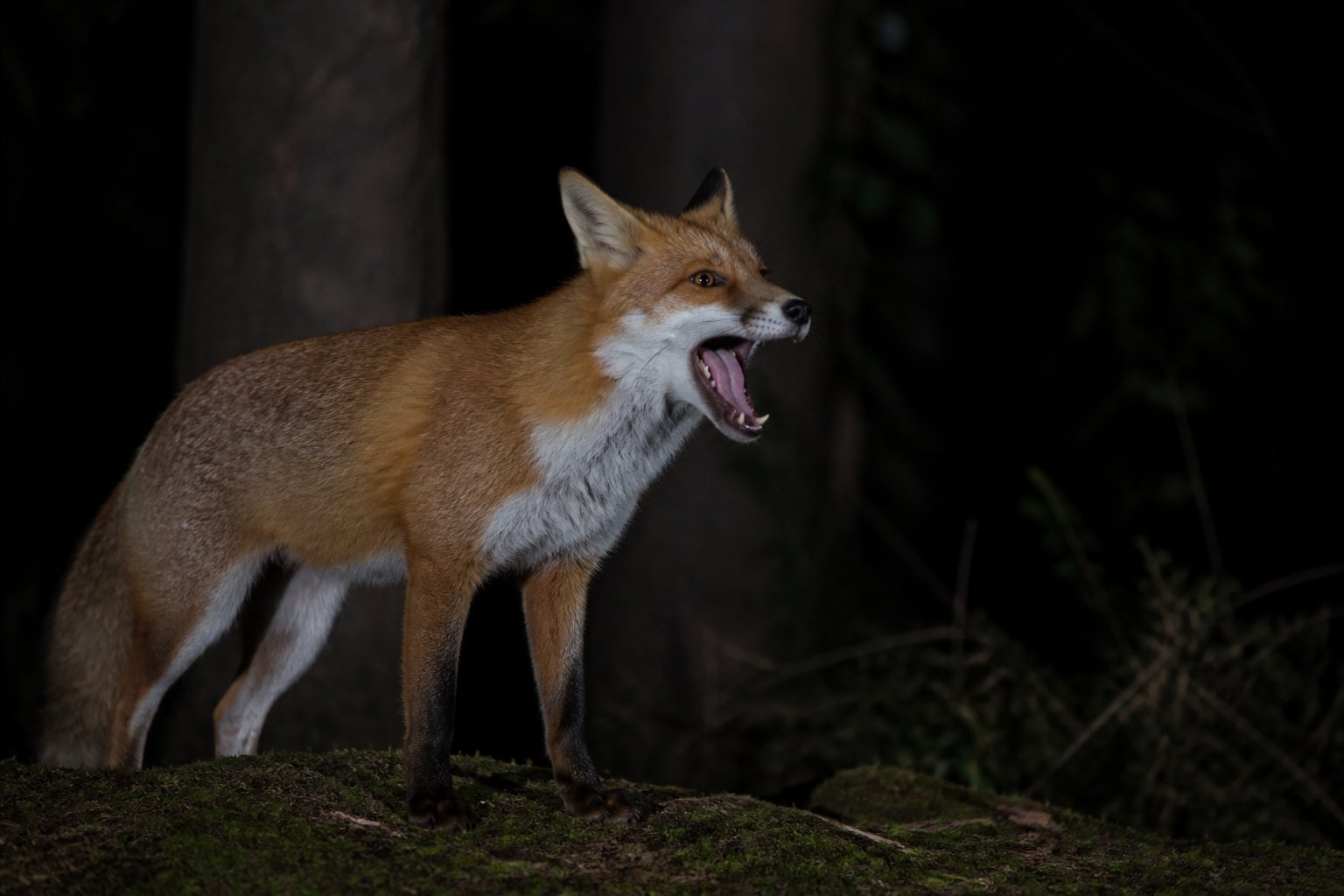
*Suggested alt text: Red fox opening its mouth to scream in a moonlit woodland.*
Urban foxes make the phenomenon especially common. Parks, railway corridors, yards and quiet streets provide routes through cities, placing fox calls within earshot of bedrooms. Winter nights are long and often quiet, so the sound carries well.
If a scream may genuinely be human, safety comes first: listen for words, repeated pleas or other evidence and contact emergency services when there is a credible reason for concern. If the call repeats with the same tone and rhythm, comes from typical fox habitat and moves like an animal, a fox becomes a likely explanation. Avoid approaching or feeding it.
**Best time to hear it:** At night, especially during the winter breeding season.
## Number 1. Cougar
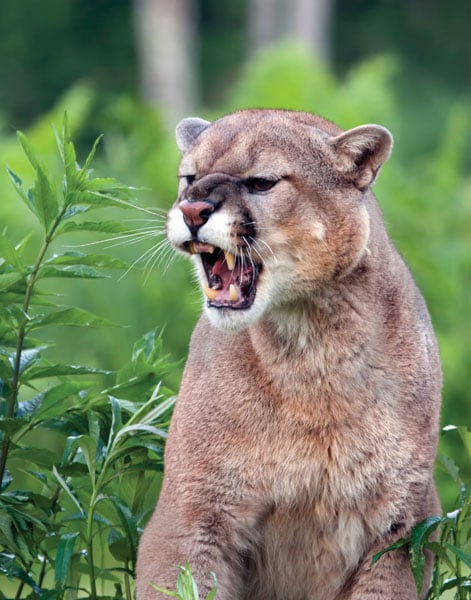
*Suggested alt text: Cougar opening its mouth while vocalizing in a forest.*
The cougar—also called the mountain lion, puma or panther—takes the top position because its scream is powerful, prolonged and disturbingly humanlike. A hidden cougar can sound like a woman crying out in terror. The call is often associated with reproductive communication, particularly females signaling to potential mates.
Cougars also use growls, hisses, chirps, whistles and softer contact sounds. Unlike lions, they do not produce the same classic roar. Their vocal flexibility surprises people who imagine a large cat must always sound like one.
Habitat makes the scream even more frightening. Cougars occupy forests, mountains, canyons and other landscapes where visibility may be limited. A call echoing from a slope can make the animal sound closer—or farther away—than it actually is. Darkness removes visual context and leaves the listener with a voice that seems unmistakably human.
The National Park Service identifies cougars as large, elusive predators and advises treating encounters seriously. If you see a cougar, do not run. Face the animal, stand upright, appear larger, keep children close, speak firmly and back away slowly while allowing an escape route. If an attack occurs, fight back. Guidance can vary by jurisdiction, so follow instructions from the wildlife agency responsible for your area.
Most people will never hear a wild cougar scream in person. Those who do rarely forget it. Its volume, tone and eerie resemblance to a human voice make it nature’s most convincing scream.
**Best time to hear it:** Occasionally at night, often in connection with mating or communication in cougar habitat.
## What Should You Do When You Hear a Humanlike Scream Outside?
Never assume immediately that a frightening sound is “just an animal.†Listen from a secure location and consider the context. Human speech, repeated words, sounds of conflict or a clear request for help justify contacting emergency services. You do not need to enter a dark or isolated area yourself.
If wildlife is the likely source, avoid chasing it for a video. Turn on exterior lights, bring pets indoors and observe from a safe distance. A stationary phone recording may help with later identification, especially if it captures several repetitions. Note the time, location, habitat, weather and direction of the call.
Bird-identification resources such as the Cornell Lab’s Merlin Sound ID can help with many bird calls, although automated identification is not infallible. Local wildlife agencies, park naturalists and reputable rescue organizations can help interpret unusual mammal sounds. Evidence is more reliable than a viral clip with an unverified label.
## Frequently Asked Questions
### What animal sounds most like a woman screaming?
Red foxes and cougars are the two animals most frequently compared to a screaming woman. A fox’s call is often sharper and may repeat at regular intervals near neighborhoods. A cougar’s scream is generally more powerful and is heard in suitable wild habitat. Bobcats can also produce intense caterwauling calls.
### Why do foxes scream at night?
Foxes scream primarily to communicate. The sound is especially noticeable during the breeding season, when foxes advertise their presence and locate potential mates. They may also vocalize during territorial or social encounters. Nighttime silence makes the call seem louder and closer.
### What bird sounds like a person screaming?
Barn owls produce long, raspy shrieks that can sound human. Peacocks make powerful calls sometimes interpreted as a person shouting “help.†Other birds can produce surprising screams, so comparing a recording with a trusted bird-sound library is the best identification method.
### Do mountain lions really scream like humans?
Yes. Cougars can produce a long scream that strongly resembles a human voice, particularly a woman crying out. The sound is usually communication rather than evidence that the cat is attacking something. However, anyone in cougar country should follow local safety guidance and avoid approaching the source.
### Do bobcats sound like screaming women?
Bobcats can make harsh yowls, screams and caterwauling noises, especially during the breeding season or confrontations. Their calls are sometimes confused with those of foxes, domestic cats or other wild felines.
### Do fishers actually scream?
Fishers can vocalize, particularly when threatened, but the legendary long fisher scream is often misattributed. Foxes and wild cats are common alternative sources. Without a visual sighting or additional evidence, a nighttime scream should not automatically be identified as a fisher.
### Why would a rabbit scream?
A rabbit scream usually indicates extreme fear, pain or distress. It is not a routine call. Check a domestic rabbit immediately for danger or injury and seek veterinary help when needed.
### Are screaming animal sounds dangerous?
The sound itself usually represents communication and does not necessarily mean the animal is approaching or attacking. Risk depends on the species, distance and situation. Never follow an unidentified scream into darkness, and keep children and pets close.
### Can an app identify an animal scream?
Apps can be helpful, especially for birds, but results should be treated as suggestions. Poor recordings, echoes and overlapping sounds reduce accuracy. Compare multiple recordings and consult local experts when identification matters.
### Which animals on this list are commonly heard near homes?
Goats, peacocks, barn owls and red foxes are among the most likely, depending on where you live. Rabbits may live nearby but rarely scream. Cougars and lynxes are much less commonly heard and occur only within appropriate ranges and habitat.
## Final Thoughts
Animals do not need human language to sound uncannily human. A goat can yell like an impatient neighbor, a peacock can appear to call for help, and a fox can turn an ordinary winter night into a mystery. Barn owls, koalas, seals and wild cats demonstrate how diverse animal communication can be.
These frightening voices have practical purposes. They reunite families, advertise strength, attract mates, warn competitors and express distress. Understanding that context replaces fear with curiosity—but it should never replace good judgment. Listen safely, respect wildlife and investigate credible signs of human danger through the proper authorities.
Which of these animals would frighten you the most if you heard it screaming outside your window tonight?
## Publishing Notes
**Suggested social title:** 10 Animals That Sound Exactly Like Screaming Humans—Number 1 Is Terrifying
**Suggested excerpt:** That bloodcurdling scream outside may not be human. Meet ten animals whose fox cries, owl shrieks and cougar calls can fool your ears.
**Suggested image caption:** Foxes, barn owls, koalas and cougars produce some of nature’s most startling humanlike calls.
**Suggested internal links:** nocturnal animals, loudest animals in the world, fox facts, owl facts, cougar safety, animal communication.
**Suggested tags:** Animal Sounds, Wildlife Facts, Nocturnal Animals, Foxes, Cougars, Owls, Animal Communication
## Sources and Further Listening
– [Cornell Lab of Ornithology: Bird sounds and Sound ID](https://merlin.allaboutbirds.org/sound-id/)
– [National Park Service: Cougars in Yellowstone](https://www.nps.gov/yell/learn/nature/cougar.htm)
– [National Park Service: Headwaters wildlife podcast](https://www.nps.gov/podcasts/headwaters.htm)
*Image note: Confirm the license and obtain permission for each suggested image before commercial publication. Replace these editorial references with your own photographs or properly licensed stock images when publishing.*